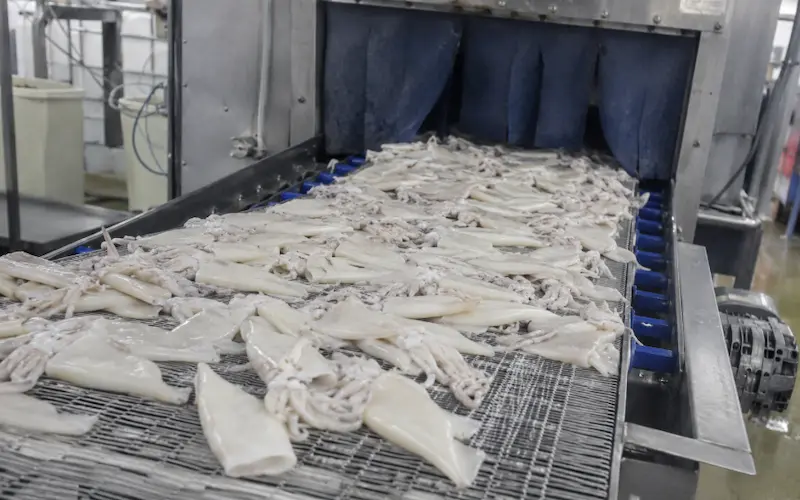
IQF stands for Individually Quick Frozen. It is a freezing process in which each individual
piece of squid — each tube, each ring, each baby squid, each tentacle — passes through a blast
freezer or cryogenic tunnel and is frozen separately, in isolation from every other piece, at
an ultra-low temperature typically between -30°C and -40°C.
The result is a bag or carton of frozen squid pieces that are completely separate from one
another — free-flowing, loose, not stuck together. Open a bag of IQF squid tubes and you can
take out exactly the number of pieces you need, reseal the bag, and return the rest to the
freezer without any quality loss. This is the fundamental commercial advantage of IQF:
portion control, flexibility and zero waste.
IQF freezing is fast — the rapid temperature drop minimises ice crystal formation inside the
squid flesh, preserving the cellular structure of the meat. This translates directly into
superior texture, better colour retention, lower drip loss on defrosting and higher finished
product quality. For buyers whose end customers are eating the squid — retailers, foodservice
operators, restaurants — IQF is almost always the preferred format.
The IQF process also typically involves glazing — a thin coating of water that is applied to
the frozen squid pieces to protect them from freezer burn during storage and transit. Glazing
percentage is a critical commercial specification: standard glazing runs from 10% to 20%,
meaning that 80% to 90% of the gross weight you buy is actual squid flesh. At First Squid, we
specify glazing percentage transparently on every contract — no hidden overglaze, no surprises
on net yield.
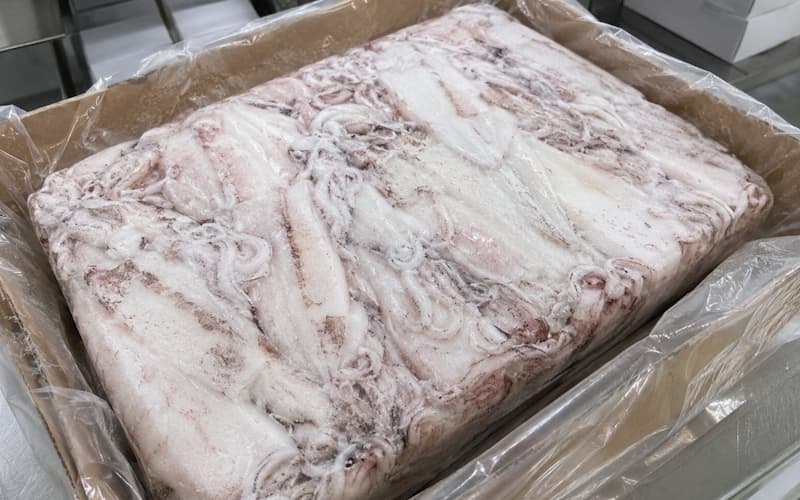
IQF squid is packed in standard polybags inside master cartons — typically 10kg, 15kg or 20kg
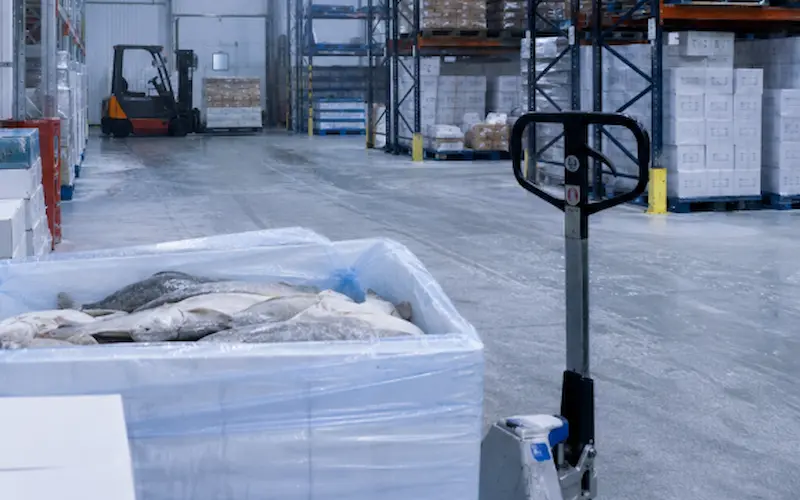
net weight per carton — and stored and transported at -18°C or below.
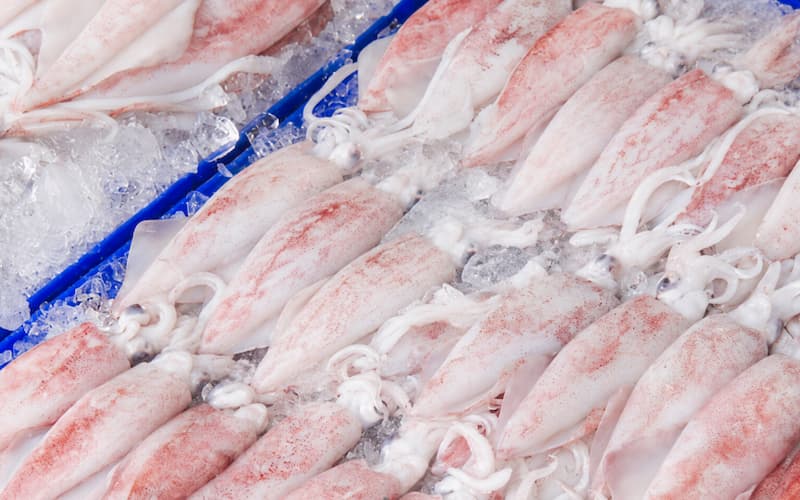
tubes · rings · baby squid